Five sisters enroll in pancreatic cancer screening study at Sarasota Memorial

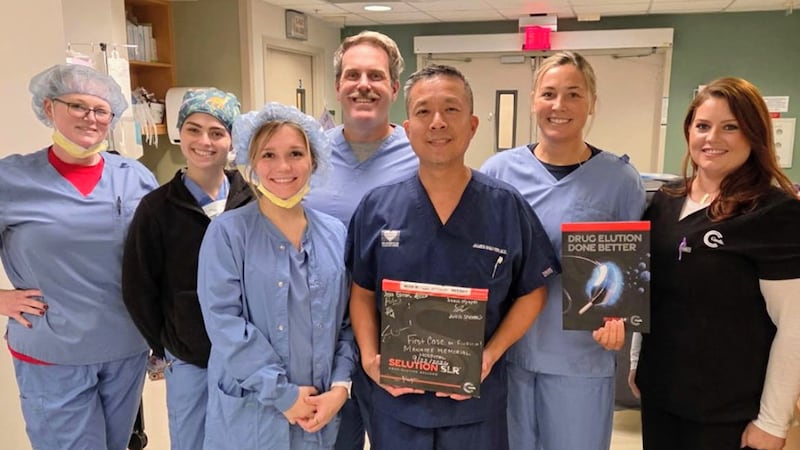
SARASOTA, Fla. (WWSB) - Five sisters with a family history of pancreatic cancer were among the first people to enroll in a Sarasota Memorial Hospital study evaluating a new screening technology designed to detect pancreatic abnormalities before they become cancer.
The sisters traveled together from south Florida to SMH’s Kolschowsky Research and Education Institute in Sarasota to take part in the study. The technology, called LINFU, or Low-Intensity Non-Focused Ultrasound, is being studied as a possible screening tool for people considered high risk for pancreatic cancer who do not have signs or symptoms of the disease.
Their father died of pancreatic cancer 10 years ago at age 76. Since then, they have worried about whether the disease could affect them or their children.
“For families like ours, pancreatic cancer is always in the back of your mind,” said Silvia Jackson, 52, whose sisters Paula, Ana, Claudia and Monica range in age from 48 to 59. “We were so happy to be able to do this together. When our dad was diagnosed, it was such a gut-punch to us all, because it came out of nowhere. We were so afraid of getting bad news, going together made it easier.”
SMH said the screening combines FDA-cleared ultrasound and endoscopic technologies in a two-step outpatient procedure. It is sometimes referred to as a “Pap smear for the pancreas.”
Hospital tests experimental device to prevent AFib after heart surgery
During the procedure, each sister received an intravenous injection of the hormone Secretin and a contrast agent, then underwent a painless, 15-minute ultrasound, according to SMH. The hormone stimulates the pancreas to release digestive fluids. The contrast agent helps create tiny bubbles that, combined with gentle ultrasound vibrations, dislodge cells from the lining of the pancreas.
In the second step, SMH First Physicians Group gastroenterologist Mark Radetic performed an endoscopy to collect pancreatic secretions for testing.
SMH said LINFU produces a larger cell sample than traditional methods, which may help pathologists detect abnormalities that standard tests could miss.
Kenneth Meredith, chief of gastrointestinal oncology at SMH’s Brian D. Jellison Cancer Institute and principal investigator of the local study, said the research could be an important step forward.
“Before LINFU came along, we had no way to really screen for pancreatic cancer,” Meredith said. “If we can pick up some of these pancreatic lesions as they are first developing, before they become malignant, we may potentially be able to cure patients before they ever develop pancreatic cancer.”
Pancreatic cancer is difficult to detect early, SMH said. Some patients with inconclusive or abnormal screening results may need additional testing, including MRI, CT scans, endoscopic ultrasound or other pancreatic imaging procedures.
The research team will follow the sisters and other study participants over time. Researchers will track future biopsies, surgeries and other clinical outcomes to evaluate whether earlier detection through LINFU could ultimately improve survival rates for high-risk patients.
The sisters recently learned that four of them are clear at this time. One sister’s screening sample was insufficient and will require repeat testing.
“We did this together, not only for ourselves and our children, but also for other families facing the same uncertainty,” Silvia said. “And in a way, it was a way of honoring our dad, because if he could have been screened for this, maybe he would still be with us today.”
People interested in learning whether they are eligible to participate in the local study can contact Sarasota Memorial’s research team at 941-917-2225 or researchinstitute@smh.com.
Copyright 2026 WWSB. All rights reserved.